05 January 2026

Some Don't Comprehend that Some Christians Have Understood and Contributed to Science More Than 17 Centuries

 I went over some of the misconceptions people have regarding science and scripture and the way they relate. Keep in mind the Bible is primarily about relationships and is not a scientific text. I don’t believe God wanted to give away a lot of futuristic, 21st century scientific knowledge in scripture for that would have changed human history a lot. Imagine for instance what kind of world it would be if the Vikings had knowledge of nuclear weapons and the ability to make them in the 11th century A.D.

It is usually a logical error to assume one knows the knowledge of large numbers of people, as if they were a unitary and practico-inert material one learned. One may stipulate select parameters that know one has knowledge of- yet that would include all people in a rather syllogistic paradigm (i.e. Socrates is a man, all men are mortal, therefore Socrates is mortal) Many Christians are quite modern in scientific knowledge, yet science isn’t  a primary concern of Christians.

Christians were some of the founders of scientific fields and/or worked in them much. Coppleston in a way invented Big Bang Theory extrapolating from Einstein's equations of general relativity as a Catholic, Newton invented quite a good gravity explanation that worked until Einstein's in addition to Calculus, and Gregory Mendel invented genetic as a monk. Gregory Cantor invented trans-finite numbers- a rather outstanding mathematician, before becoming a monk. It is incorrect to say that Christians have been detached from science when they where at times leaders in it.

An AI wrote this about Biblical cosmology; "Overall Biblical Cosmology;

“The Bible reflects ancient phenomenology: the earth "looks" flat and circular from human view, with the sky as a dome ("firmament") holding back waters above, sun/moon/stars moving across it, and earth immovable/fixed for habitation. This aligns with Babylonian/Egyptian views but emphasizes Yahweh's unique sovereignty—no rival gods battling chaos.

It never says "the earth is flat" or debates shapes. No verse requires a flat earth to make sense, and none contradicts a globe when read poetically (as intended). Early church fathers (e.g., Augustine) and medieval scholars accepted a round earth; the "flat earth myth" about Christianity is a 19th-century fabrication.

In short: The Bible is silent on the modern flat vs. globe debate because that's not its purpose. It uses everyday, observational language (like we say "sunrise" today) to point to God as Creator and Lord over all. Scientific details about earth's shape come from observation and math, not Scripture."

Here is a book that I wrote about some of the problems people have concerning the relationship of science and scripture.

Free to download ...  https://www.lulu.com/shop/garrison-c-gibson/christianity-evolution-and-digital-universes/ebook/product-wnddgd.html?q=christianity%2C+evolution+and+digital+universes&page=1&pageSize=4

04 January 2026

The Most Important Philosophical Question

 The concept of a creator of the Universe is a philosophically logical question that any intelligent person would consider; life being such a strange occurrence after all. And it would take someone not very bright to fail to realize that the question has a 50-50 chance that one can answer either way. One may find whatever answer to that question one does, yet like most philosophical questions it requires a crassness beyond measure to try to abuse or bully people into agreeing with their viewpoint. Some people are made to be lost, and others saved. Some are destined to eternal life with God and others to oblivion or worse. Believe it or not.

Atheists may be compared favorably to deer caught in the headlights of an approaching car mesmerized by the bright lights in the dark-like stars in the vast Universe- and lose intellectual capacity to realize that the phenomenality of being is subjectively interpreted and the true cause of everything including their own thought may be beyond their grasp. Appearances can be deceiving.

Metaphysics is just fine- it simply means greater physics. In a way that is the basis for many cosmological theories extrapolating beyond observable, known physics. Christians like Augustine were brilliant with interesting ideas about time. He was a Plotinian before becoming Christian. Plotinus's Enneads- 54 tractates are a great paradigm of neo-Platonism explaining Platonic metaphysics at length from Plotinus' point of view. I am a believer in Jesus Christ as the Son of God. Phenomenally it is rather wonderful that He made an appearance in this Universe on this planet. Historically, if one learns the Bible and its content with some depth it is very challenging not to believe that Jesus is God. It is popular of course, these days, as reactionaries to Darwinism, to have a contra-point of view. I believe that is because of the unofficial politicization of the Church that has drawn followers over the ages. The tide turned in that element after European revolutions against royalty combined with Darwinism, and in the modern world consumer comfort driving economic development has also reduced interest in faith for a substantial percent because people become so comfortable without it.

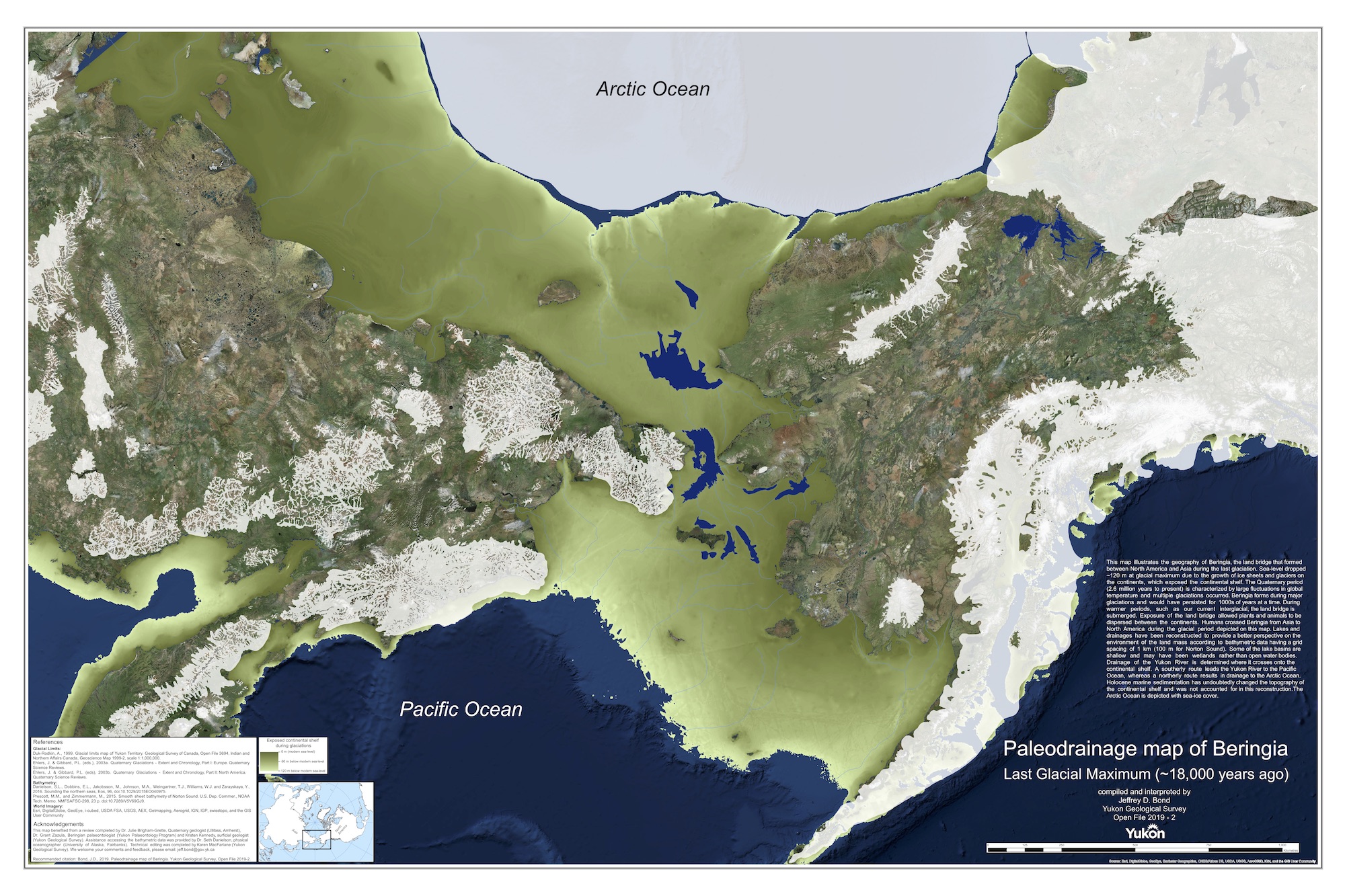
Comparing Viking and Berengian Refugia Cold Weather Environments, Diet and Genetic Adaptations -written by Grok


From Beringia to the Vikings: Ancient Journeys Through Ice and Adaptation

In the vast tapestry of human history, few stories captivate like those of populations who thrived in the planet's harshest cold environments. The Beringian standstill—a pivotal chapter in the peopling of the Americas—and the rise of the Vikings in Scandinavia offer fascinating parallels and contrasts. Both groups navigated extreme climates, evolving unique adaptations that shaped their genomes, bodies, and cultures. Yet, their paths diverged dramatically: one led to the Arctic indigenous peoples like the Inuit, while the other forged the Norse seafarers who raided and settled across Europe.

This article delves into the histories, daily lives, climatic challenges, and genomic legacies of these groups. Drawing from archaeological, genetic, and paleoclimatic evidence, we'll explore how isolation in icy refugia molded human resilience—and what echoes remain today. Note: While some popular notions link European haplogroups like H to Beringia, genetics tells a different story; Beringian migrants carried distinct lineages, highlighting separate evolutionary trajectories.

The Beringian Standstill: A Frozen Pause in Human Migration

Around 25,000 to 15,000 years ago, during the Last Glacial Maximum (LGM), a group of ancient Siberians became isolated on the now-submerged land bridge known as Beringia. This vast region, stretching from eastern Siberia to western Alaska, was an ice-free refugium amid global glaciation. The "standstill" hypothesis posits that these migrants were stranded for 2,400 to 9,000 years (not 11,000 as sometimes overstated), due to massive ice sheets blocking southward paths into the Americas.

Beringia wasn't a barren wasteland but a steppe-tundra ecosystem supporting megafauna like woolly mammoths, horses, and bison. Paleoecological records show a cold, arid landscape with sparse vegetation, high winds, and low precipitation—winters dipping to -20°C or lower, with brief summers around 4°C cooler than today. Humans here were hunter-gatherers, relying on big-game hunting, fishing, and gathering hardy plants. Tools like microblades and bone artifacts from sites like Swan Point in Alaska reveal sophisticated survival tech, including insulated clothing from animal hides.

This isolation fostered genetic divergence. Mitochondrial DNA haplogroups A, B, C, D, and X (particularly X2a) dominated, originating from East Asian founders—no trace of European-linked haplogroup H or its subclade H2a, which arose later in the Near East and Europe. Post-standstill, around 15,000 years ago, warming climates opened ice-free corridors, allowing migration into the Americas and the eventual emergence of diverse indigenous cultures, including the Thule ancestors of the Inuit.

Viking Origins: From Post-Glacial Pioneers to Norse Raiders

In contrast, Scandinavia's human history began as the LGM ice sheets retreated around 12,000–11,000 BCE. Early settlers were Mesolithic hunter-gatherers from southern European refugia (Western Hunter-Gatherers) and eastern Baltic regions (Eastern Hunter-Gatherers), arriving via land routes through modern Denmark and Germany. By 7,000 BCE, stable communities thrived, hunting reindeer and seals in a thawing landscape.

The Neolithic era (~4,000 BCE) brought Anatolian-derived farmers, introducing agriculture and mixing with locals. A major influx came around 2,800–2,000 BCE with Indo-European steppe herders (Yamnaya culture) from the Pontic-Caspian region, carrying R1a and R1b Y-chromosomes and Proto-Germanic languages. This genetic cocktail—~40-50% hunter-gatherer, 30-40% farmer, 20-30% steppe—formed the Nordic Bronze Age, evolving into Iron Age Germanic tribes.

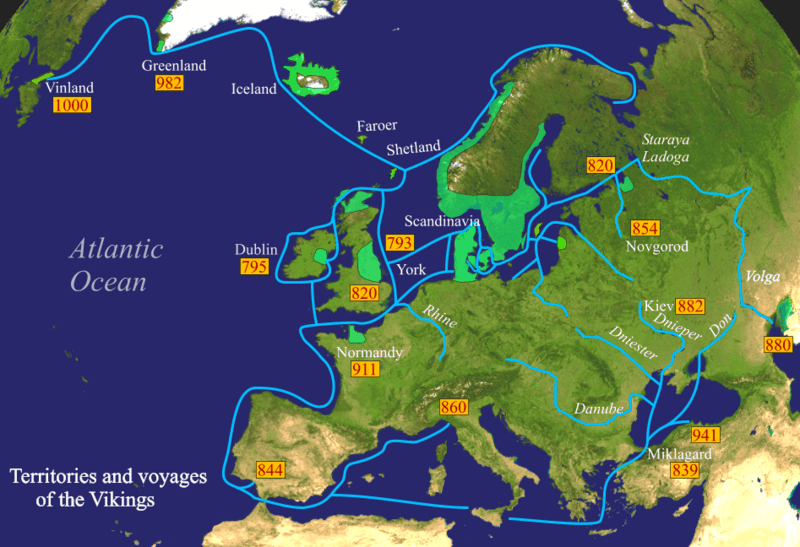
The Viking Age (793–1066 CE) emerged from overpopulation, climatic shifts, and technological advances like longships. Vikings weren't a unified people but Norse farmers, traders, and warriors from Norway, Sweden, and Denmark, expanding to Iceland, Greenland, and beyond. Haplogroup H, peaking at 40-50% in Scandinavians, reflects this European heritage, with no Beringian ties.

Climate Showdown: Beringia's Extremes vs. Scandinavia's Temperate Edge

During the LGM, Beringia was a cold, dry steppe-tundra, with July temperatures ~4°C cooler and January ~2°C cooler than modern equivalents—overall harsher than habitable European zones. Scandinavia itself was largely ice-covered, forcing humans to southern refugia like Iberia, where winters were milder (4-8°C cooler) with more precipitation and diverse resources.

Post-LGM, Europe warmed rapidly, fostering forests and agriculture by 10,000 BCE. Beringia remained Arctic-like, with persistent cold driving adaptations in its descendants. Viking-era Scandinavia experienced the Medieval Warm Period (~900–1300 CE), aiding expansion, but winters were still brutal—sea ice trapped ships, and storms delayed voyages. Beringia's isolation amplified selection pressures, while Scandinavia's connectivity allowed cultural exchanges.

Daily Life: Survival in the Deep Freeze

Beringian life revolved around mobility: hunting megafauna with atlatls, fishing in icy rivers, and sheltering in semi-subterranean dwellings insulated with sod and bones. Diets were high in protein and fat from seals and caribou, with minimal carbs—essential for thermogenesis in -20°C winters.

Vikings, in a more temperate yet variable climate, farmed barley and rye in short summers, herded sheep and cattle, and fished cod. Winters meant indoor activities: storytelling, crafting, and feasting on preserved foods like butter-laden porridge. High-fat dairy and meat diets (35-40% fat) fueled them through dark months, with no evidence of widespread heart disease due to intense activity and short lifespans (30-40 years). Social adaptations included communal longhouses for warmth and Viking raids for resources during harsh years.

Genomic and Physical Adaptations: Evolving for the Cold

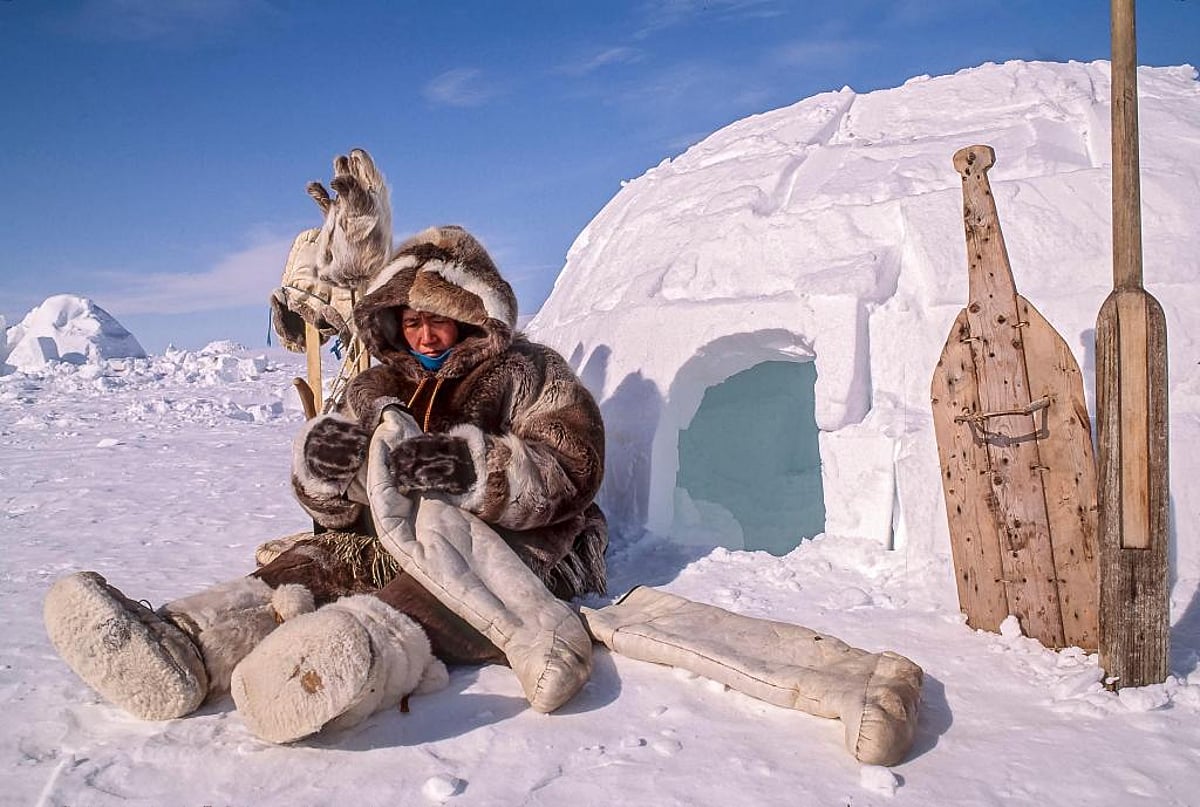
Beringian descendants, like the Inuit, exhibit profound cold adaptations per Bergmann's and Allen's rules: shorter limbs, broader chests/torsos to minimize heat loss, and flatter facial features (including potentially smaller breasts) to reduce frostbite risk. Visceral fat storage around organs provides insulation and energy, enabled by genes like CPT1A for efficient fat metabolism on marine diets rich in omega-3s. These mutations lower LDL cholesterol and insulin, aiding survival but raising modern risks like diabetes with Western diets.

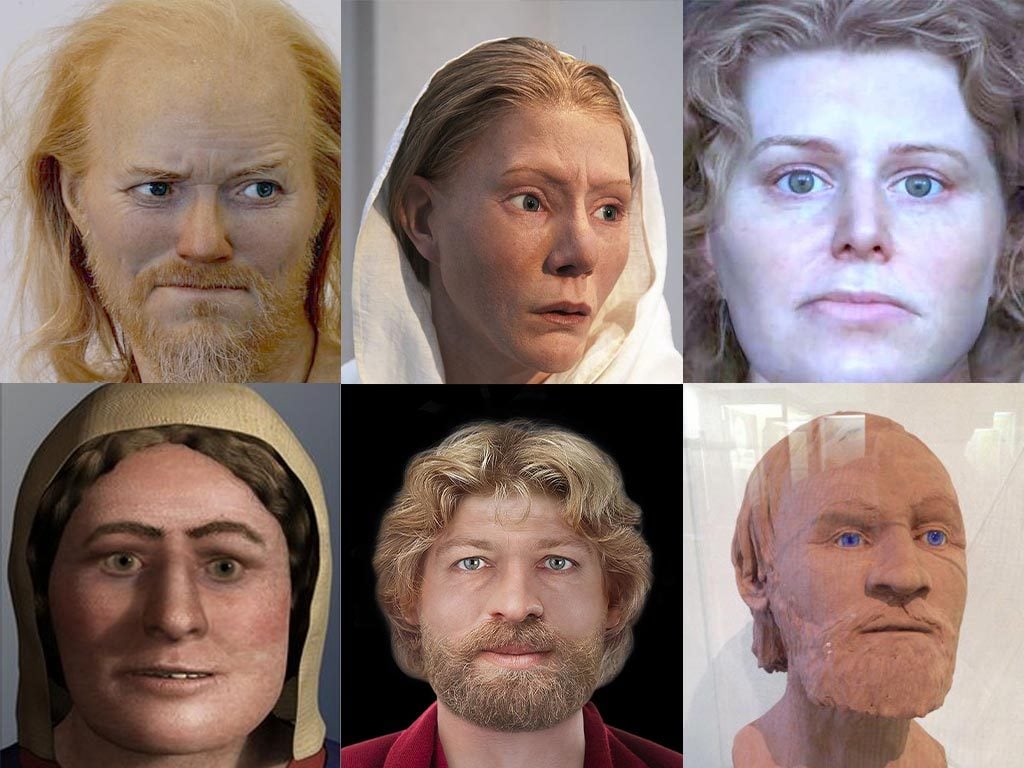
Scandinavians show milder adaptations: stockier builds and pale skin for vitamin D synthesis in low sun, but more external fat storage (e.g., in hips and breasts) due to calorie surpluses from farming. Haplogroup H may link to metabolic efficiency, but Vikings relied more on cultural tools—wool clothing, skis, and ships—than genetic extremes. Larger breasts in some European women tie to estrogen and nutrition, not cold selection.

Aftermath: Legacies in a Warming World

Beringian migrants populated the Americas, their adaptations persisting in Inuit genomes, now challenged by climate change—melting ice disrupts hunting, while dietary shifts amplify health issues. Vikings' expansions faded with the Little Ice Age (~1300 CE), but their genes influence modern Scandinavians, who face fewer cold extremes thanks to technology.

These stories remind us: Human adaptation is dynamic. As global warming reshapes the Arctic, understanding these ancient resiliences could inform future survival strategies.

What do you think—could Viking butter feasts or Inuit fat-metabolism genes inspire modern diets?

Anti-Sanity Democrats Declare Trump Insane For Netting Maduro

 Leading Democrats acted swiftly to declare President Trump insane following the capture of Venezuelan former President Maduro. Democrats have redefined insanity to mean political enemy. In that regard Democrats evolved to be the anti-sanity party, since the electoral majority are politically sane by conventional standards.

  On the socialist agenda, Maduro was a resistance hero. For real politics he was a terrible loser. Hopefully the new Venezuelan president will not resist prosperity the next three years, much less spend the lives of her citizens in a senseless conflict with international forces trying to reestablish free enterprise and democracy in Venezuela with drug trafficking to the USA. Siding with anti-sanity political forces would be a gravely wrong choice. The United States has no colonies and never will. The new president of Venezuela shouldn't be mired in the anachronistic rhetoric of anti-sanity Marxist revolutionaries that just creates war and inefficiency in economics. Democracy with an intelligent electorate works best.

  In the old days assassination of corrupt foreign leaders was lawful. That changed in the 20th century after WW2 when people sought international stability. People eventually learn to take advantage of international legal situations and loopholes to let corruption flourish, so laws need to be upgraded to remedy the way things are in the present.  The UN would have let Saddam Hussein lead Iraq forever, and dictators anywhere felt secure from foreign military intervention at least until President Obama took  out Muammar Gaddafi- via CIA support for Libyan rebels; letting civil war, anarchy and Isis flourish in Libya.  https://en.wikipedia.org/wiki/CIA_activities_in_Libya

President Trump cannot let civil war develop and anarcho-terrorism continue in Venezuela. Powerful nations will not long tolerate neighboring nations to be inimical; harming them without bringing consequences to the mockers. That is from the rule of power, of which the rule of law is a subset. The media of course would like another Ukraine to develop in Venezuela and will encourage polemical parameters to support that vector/prospect.

https://www.axios.com/2026/01/03/trump-venezuela-maduro-democrats-congress

03 January 2026

Maduro Captured; Zohran Mamdami Next?

Overnight Venezuelan Dictator President Maduro was captured following the inauguration of the socialist Zohran (Karl Marx) Mamdami to be Mayor of New York. Mamdami has pledged ‘to end rugged individualism’ in New York and render everyone docile, malleable pawns of party leaders. Yet what is of concern are potential secret plans to socialize the New York Stock Exchange after expropriating the funds invested there via some clever financial coup d'etat of taxation. Maybe Mayor Mamdami will show investors how to really invest in blockchain.

Will former Dictator-Maduro face the same suicidal death as Jeffrey Epstein while in jail, or will he be kept out of New York City dungeons and be given a hero’s welcome and a ticker tape parade? Maduro is being transported to Manhattan for charges in the U.S. Southern District Court of New York. This is the twin towers perp walk effect; setting an example for Mayor Mamdami? If after interrogation, would he be willing to become converted to a supporter of Donald Trump after confessing that he hadn’t realized the brilliance of our leader since he was so bogged down with the details of managing socialist affairs in Venezuela?


I was trying to find something funny to write about the overnight events and didn’t fare well. I guess the actual events will speak for themselves.

Defunding N.Y.C. Police could be next on the agenda for drawing New York City and the nation farther into the chthonic takeover of state socialism. Social media corporations are loaded with party loyalists willing to censor free speech in innovative ways.

 Defunding police may be a cost saving measure since there are many gangs willing to step into the void and provide security and protection for small and large businesses off sidewalks for free, or at least for a small percent piece-of-the-action service charge. 

The Mayor could end homelessness synthetically recombining new technology with new urban design. While President Trump is making fossil fuel and democracy great again in Venezuela Mayor Mamdami could find it feasible to eliminate automobiles from the city, replace them with fast moving wind and solar  powered sidewalks and make odd numbered streets new building spaces for innovative homeless housing structures and super-conducting, hydrogen cooled power lines.


01 January 2026

Mindful ( a poem)


An examination of experience
from cradle to the grave
learning to be and become

While wars slathered with perfidy of a world rave
God provides life with the Holy Spirit
bringing thought to life and futures to see

Drawing the saved closer to the eternal
God evolves one closer to meaning
perfect dreams may not occur in time
though miracles for wonder may begin

Rainbows becoming materialized spheres
elements in minutes spanning distances for years
instantaneous sections become too much to be
what is life, that thou art mindful of it?


Berengia Refugia (poetry)


Wind swept tundra Iŋaliq high
reaching upward forever into the midnight sky
stars shown across lakes and rivers
eternity hunting game with Atlatals and shivers

My joy ride pony was a snack in the dark
life wasn't just a walk in the park
for the scimitar-toothed cat that left hooves and blood
winter carnivores too would perish in mud
from clouds of spears thrown like cold structured rhymes

Glowing green arms of sky through night's waves
showed where the predator hunted
drawn to firelight raves
sending life ending points, arm's countless flicks
an x tribe refugia lasted consisted eleven thousand years

There is nothing to the future, except the future itself..

https://suno.com/s/PREKO1r8XM0rRbGW Berengia Refugia (song)

Author note: I wrote this poem in the first person narrative, yet the narrator sees the future and writes as an omniscient narrator too. Considering that reminded me of what Winston Churchill said (approximately paraphrased with a lot of fiction thrown in); "There is nothing to the future, except the future itself!"

Spiral Algorithms and AI Analysis of Data Structures Synthetically

Just chatting with AI about sundry topics on a thread.  Gary – Could the  United States offer associate statehood to foreign countries so we...